

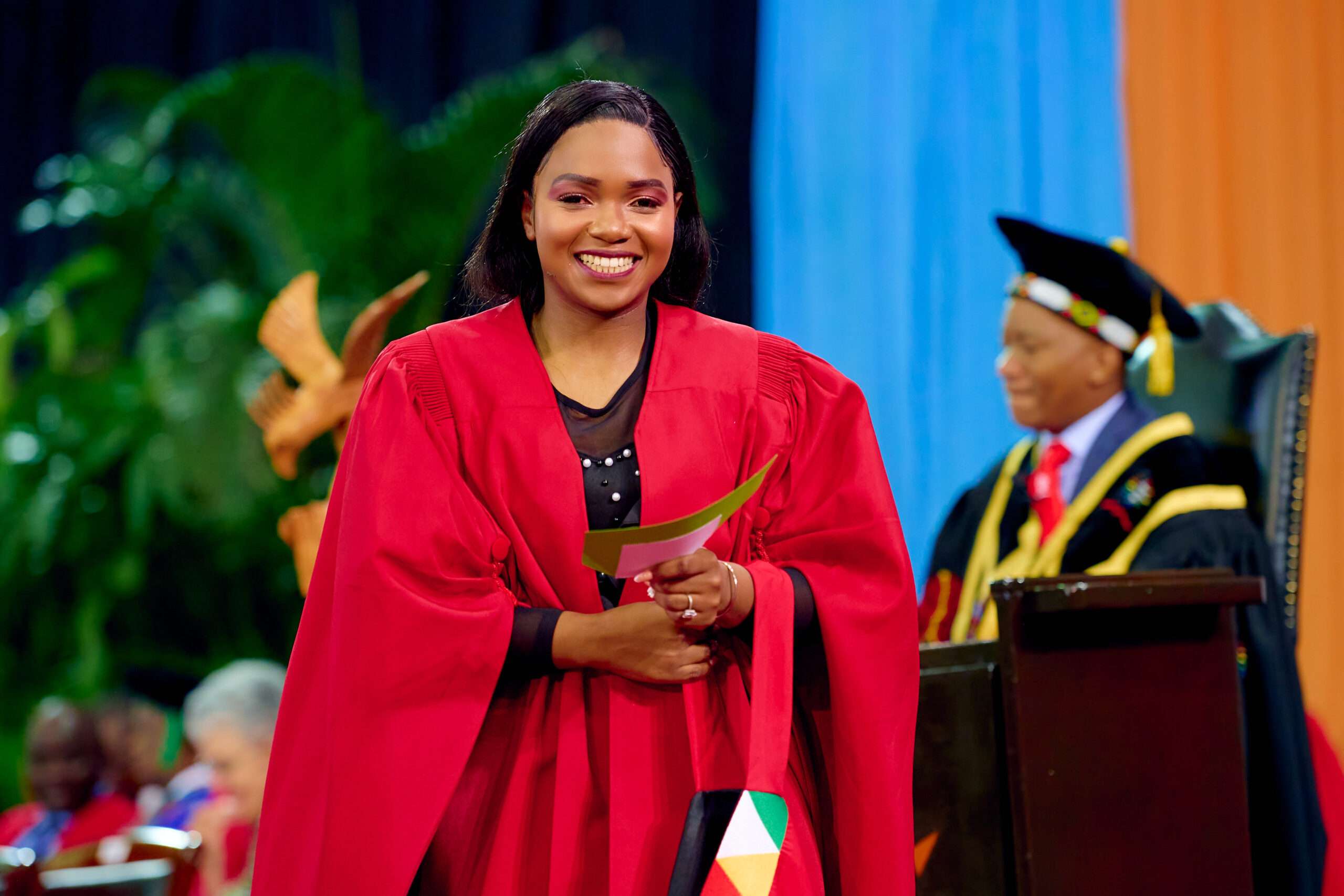
Research has shed new light on the ecological importance of soil microbes in sustaining cycads – among the world’s most threatened plant species.
The research was conducted by Dr Khululwa Ndabankulu, who graduated with a PhD in Biology from the University of KwaZulu-Natal (UKZN).
Her thesis: ‘Geographic Variation in Nutrient Inputs, Soil Microbe Symbiosis and Soil Enzymes among Populations of the African Cycad Genus Encephalartos’, was supervised by Professor Anathi Magadlela, Dr Syd Ramdhani and Dr Terence Suinyuy.
Ndabankulu decided to study for her PhD at UKZN because the Institution offered both academic excellence and, through its fee remission policy, a level of financial support not commonly available. The University’s strong reputation in environmental and biological sciences, particularly in plant-microbe interactions and ecosystem research, as well as access to diverse natural ecosystems such as the KwaZulu-Natal scarp forests, made it an ideal setting for meaningful scientific inquiry.
At the heart of Ndabankulu’s research was a focus on the African cycad species, Encephalartos, and their interactions with soil microorganisms. “These plants often grow in soils that are low in important nutrients like nitrogen and phosphorus, meaning they rely heavily on beneficial microbes to survive,” she explained. Her work examined cycads from Benin and South Africa, investigating how these relationships influence soil health. “My work shows how cycads can naturally enrich the soil, which is essential for maintaining healthy ecosystems and supporting biodiversity,” she said.
The study’s findings underscore the ecological significance of cycads beyond their status as endangered species. “The conservation of globally threatened cycads includes managing soil functionality and plant-soil-microbe interactions,” said her supervisors. “Khululwa’s study explored the microbial and physiological properties of Encephalartos, a species which hosts microbial communities that act as ecological engineers, mediating nutrient mobilisation, improving soil fertility and ecosystem stability in habitats increasingly threatened by land-use change and climate variability.”
Ndabankulu’s interest in this field developed early in her academic journey. “I have always been fascinated by the hidden world beneath our feet, especially how microorganisms influence plant health and ecosystem functioning,” she said. She credited Magadlela with sparking her passion for soil science and microbial ecology, noting that exposure to indigenous plant systems deepened her appreciation for the resilience of natural ecosystems.
The significance of Ndabankulu’s research lies in its contribution to understanding how natural ecosystems sustain themselves. “By highlighting the role of plant-microbe interactions in improving soil nutrients and enzyme activity, my work supports the use of nature-based solutions to restore and maintain healthy ecosystems,” she explained, adding that such insights are crucial for addressing land degradation, climate change and the need for sustainable agricultural practices.
Ndabankulu’s future plans include pursuing a postdoctoral fellowship where she can expand her research in microbial ecology and climate-resilient ecosystems, apply her findings to real-world environmental issues, and mentor emerging scientists.
She thanked her supervisors, and credited her husband, family and friends for their unwavering encouragement.
Outside of her research, Ndabankulu finds fulfilment in reading, spending time with family and connecting with nature. She also dedicates time to mentoring students as a First Year Experience (FYE) mentor.
“Completing my PhD has been a deeply rewarding journey marked by growth, resilience and self-belief,” she said. She expressed hope that her work would contribute to environmental conservation and encouraged aspiring scientists to remain steadfast in their pursuits.
Quoting scripture, she added: “For I know the plans I have for you,” declares the Lord, “plans to prosper you and not to harm you, plans to give you hope and a future” (Jeremiah 29:11).
Words: Sally Frost
Photograph: Sethu Dlamini