

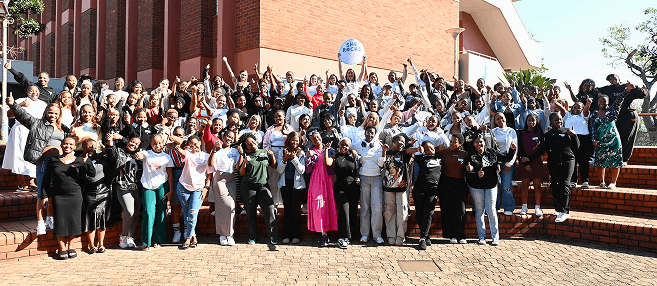
The University of KwaZulu-Natal (UKZN)’s School of Agriculture and Science is championing student success and gender inclusion through its ‘She Rocks the Field’ workshop, an initiative designed to empower female Geology students with the confidence, practical skills and support needed to thrive in the field.
Originally introduced in 2023 as a lecture titled ‘Females in the Field’, the programme has since evolved into a full-day interactive workshop that creates a safe and welcoming space for women to discuss the realities of fieldwork and develop skills that extend beyond the classroom.
According to senior lecturer, Dr Lauren Hoyer, the initiative was established to address the persistent underrepresentation of women in geology and to redefine the student experience.
“It is time to change the narrative of geology education in South Africa, to one where the degree is an education programme rather than a test of a student’s physical endurance,” she said.
Hoyer explained that the workshop is particularly relevant as women now comprise approximately 80% of UKZN’s Geology students, many of whom have had limited exposure to remote field environments.
The programme equips students with practical knowledge on field safety, personal wellbeing, hygiene in remote settings, nutrition, stress management and gender-based violence awareness, while encouraging open communication and peer support. In parallel, male Geology students participated in a dedicated workshop led by academic staff and Student Support Services, focusing on consent, respecting boundaries and supporting their peers appropriately.
“Through this workshop, we aim to equip female Geology students with the knowledge, skills and tools to succeed during their field trips and in their future careers,” said Hoyer.
The programme is also creating a culture of mentorship, with postgraduate students returning to support and guide younger cohorts as facilitators. Part of this year’s facilitators were Master of Science (MSc) in Geology students who previously attended a similar workshop as undergraduates, demonstrating how the initiative is helping to cultivate future leaders who, in turn, empower the next generation of women in the discipline.
For second-year Bachelor of Science in Geology student Ms Zama-Afrika Makhoba, the workshop reinforced a passion that began in childhood.
“I loved learning about science and history, and I was very curious about how the earth became what it is today. When I discovered that I could study the history of the Earth through geology, I knew it was for me,” she said.
While excited about her chosen career path, Makhoba admitted that entering a traditionally male-dominated profession has not been without its challenges.
‘I have felt intimidated because the mining industry and geology as a whole are incredibly male dominated. As a woman, I know the inequalities that can exist in the workplace, so it is something that makes me nervous,’ she said.
Attending ‘She Rocks the Field’ provided reassurance and a renewed sense of confidence. ‘The biggest lesson from the workshop is that we are not alone. We are stronger together as women in geosciences, and if we work together, the future of female scientists is very bright,’ Makhoba said.
She added that the practical advice and shared experiences had left her feeling prepared for upcoming fieldwork.
Initiatives such as ‘She Rocks the Field’ contribute directly to UKZN’s student success strategy by fostering a greater sense of belonging and equipping students with the tools to navigate both their studies and future careers with confidence.
Following the success of this year’s pilot workshop, plans are underway to make this an annual event, expand it to other disciplines involving overnight fieldwork and ultimately share the model with universities across South Africa.
“By empowering our women students, we can start to decolonise the traditionally male-dominated disciplines and make transformative changes in the lives of future scientists in South Africa,” Hoyer said.
As South Africa celebrates the resilience and potential of its youth, such workshops demonstrate how mentorship, practical skills development and inclusive learning environments can empower them to overcome barriers, build confidence and shape the future.
Words: Lungile Ngubelanga
Photograph: Albert Hirasen