

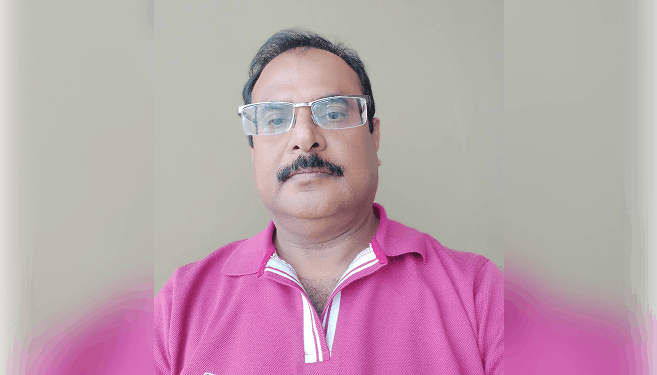
University of KwaZulu-Natal’s (UKZN) Professor Dillip Kumar Das has called for a paradigm shift in urban planning, arguing that cities in the Global South need to move beyond isolated technological interventions towards integrated, people-centred systems.
Das, a professor in the Discipline of Civil Engineering in the School of Engineering, presented his inaugural lecture titled, ‘Orchestrating the Symbiotic City: A Systems Approach to Smart Sustainable Cities in the Global South’. His research focuses on smart sustainable cities, transportation and sustainable infrastructure planning within the Global South, as well as engineering education.
Reflecting on his academic journey, Das said his thinking about cities developed from his early experience as an engineer and planner designing and building civic infrastructure. “We were designing and building solutions for people, but I had to ask: if we are truly building for them, where are they? They were not at the centre,” he said.
This question ultimately shaped his research trajectory, which moved from sustainable cities to smart cities and, subsequently, to smart sustainable cities. His current research direction also incorporates artificial intelligence and resilience, supported by information and communication technologies.
At the heart of his lecture was a critical question: how can rapidly growing cities in the Global South be transformed into resilient, equitable, smart and sustainable urban habitats?
Das argued that conventional approaches often treat technological and societal challenges separately, whereas the complexity of cities demands systems thinking. His approach considers technology, physical infrastructure, governance and service delivery as interconnected components of an urban ecosystem.
He highlighted limitations in transferring conventional smart-city models developed largely in Europe to Global South contexts, where cities face rapid demographic expansion, socioeconomic vulnerability, infrastructure backlogs and municipal fiscal constraints. Smart-city interventions can also produce digital inequality and isolated ‘smart’ enclaves when technology is deployed without adequate human and physical integration.
Das proposed a ‘symbiotic city’ built around four interconnected pillars: digital transformation as a catalyst; physical infrastructure as the bedrock; equitable service delivery as the benchmark; and participatory governance as the steering mechanism. “Digital technologies lose transformative value unless matched by capable physical civil infrastructure,” he said, emphasising that digital systems must work alongside roads, buildings, water systems, transportation and energy infrastructure. Equally, the success of digital and physical assets should be measured by their ability to deliver accessible and equitable public services.
Participatory governance, he added, was essential to ensure that technological investment served communities rather than creating benefits for only a few. Governance must balance an ‘innovation engine’ based on digital tools, data and artificial intelligence with a ‘regulatory anchor’ encompassing privacy, digital equity, e-democracy and accountability.
Drawing on empirical research, Das demonstrated how reinforcing and balancing feedback loops could support entrepreneurship, innovation, economic growth, smart mobility and equitable service delivery. His evidence showed that isolated interventions are insufficient: “only closed loop system integration yields a smart, sustainable city.”
His proposed strategic roadmap begins with systems assessment, followed by decentralised smart integration, institutional alignment and adaptive governance. The approach seeks to identify leverage points and unintended consequences while allowing urban plans to respond to real-time operational data.
Concluding, Das said, “We need a paradigm shift,” calling for a move away from linear, resource-heavy urban planning towards holistic systems thinking. For the Global South, he argued, leapfrogging traditional development cycles is possible by harmonising technological innovation with infrastructure, service delivery, economic development, ecological balance and inclusive governance.
Das’ academic and professional journey has spanned several countries and institutions. He joined Kalinga Institute of Industrial Technology (KIIT), India, in 2001 as a lecturer, progressing to senior lecturer and Deputy Registrar (Academics), before serving as an Associate Professor at Arba Minch University in Ethiopia. In 2010, he joined the Central University of Technology (CUT), Free State, as a senior lecturer, later becoming a Full Professor and Assistant Dean (Teaching and Learning). He joined UKZN’s Discipline of Civil Engineering in 2019 as an Associate Professor and was promoted to Full Professor in 2025.
He currently also serves as Head of Teaching and Learning in the School of Engineering.
His qualifications include a PhD in Planning, a Master of City Planning, a Bachelor of Science in Civil Engineering, a Bachelor of Science in Mathematics, and a Postgraduate Diploma in Higher Education.
Words: Sally Frost
Photograph: Supplied