

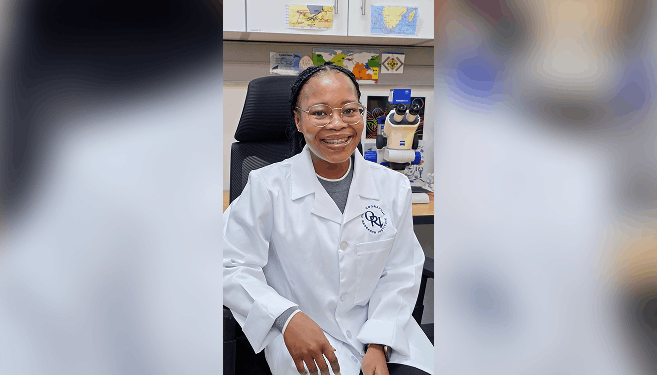
University of KwaZulu-Natal (UKZN) PhD candidate in Biological Sciences Ms Makwena Melita Sebone is a finalist in the Department of Science, Technology and Innovation’s (DSTI) South African Women in Science Awards (SAWiSA), an initiative aimed at advancing gender equity and empowering women in science, technology, engineering and mathematics (STEM).
Sebone is based at the South African Association for Marine Biological Research (SAAMBR) and is conducting research on pelagic ecosystem structure and biodiversity patterns along the South African coastline using DNA metabarcoding of marine zooplankton communities. Her research is supervised by Professor Sandi Willows-Munro, Dr Ashrenee Govender-Paul, Professor Johan Groeneveld and Dr Jenny Huggett.
Her research uses zooplankton and DNA-based data to understand how ocean conditions shape marine biodiversity, supporting better biodiversity monitoring, conservation and management of South Africa’s marine ecosystems.
Sebone is passionate about using innovative methods to observe the diversity of marine life that cannot readily be detected through traditional approaches. She has co-authored five research articles on symbiotic copepods.
“It is exciting to use DNA to discover species and better understand how marine ecosystems respond to changing ocean conditions. This research is important because healthy oceans support biodiversity, fisheries, tourism, and the livelihoods of many coastal communities. The more we understand our oceans, the better we can protect them,” she said.
As a finalist for the newly named DSTI-Prof Keolebogile Shirley Motaung Fellowships, Sebone is one of only seven doctoral candidates shortlisted nationwide for the 2026 cycle. These fellowships support female postgraduate researchers at critical stages in their academic journeys.
“I am incredibly honoured and grateful to have been selected as a finalist. This recognition represents not only my own hard work but also the unwavering support of everyone who has contributed to my journey. It motivates me to continue striving for excellence in my research and to encourage more young women to pursue careers in science,” said Sebone.
“Science thrives when diverse perspectives come together to solve complex challenges, and I am passionate about contributing to a future where our oceans are better understood, protected and sustainably managed,” she said.
Sebone completed her undergraduate, honours and master’s degrees in zoology at the University of Limpopo before enrolling at UKZN for her PhD. She chose UKZN because of the University’s collaboration with SAAMBR, which provides opportunities for research and professional development.
“This supportive environment has played a significant role in my growth as an early-career researcher,” said Sebone.
Sebone has supported the next generation of scientists through her work as a student mentor at the University of Limpopo and her involvement in the Early Career Ocean Professionals South Africa Steering Committee, where she co-leads the newsletter, outreach and recruitment portfolio.
Sebone thanked her supervisors for their guidance, encouragement and support, and her colleagues Ms Saiesha Harpal and Ms Caitlyn Fourie, for their friendship and teamwork. She acknowledged her former supervisor, Professor Susan Dippenaar, for providing a strong research foundation. She also thanked her parents and siblings for their love, encouragement, and belief.
The prestigious awards for Distinguished Women Researchers, Distinguished Young Women Researchers, and the DSTI-Prof Keolebogile Shirley Motaung Fellowships will be presented at a ceremony in Sandton, Gauteng, on 20 August. Government leaders, academics and science stakeholders are expected to attend.
Words: Christine Cuénod
Photograph: Ashrenee Govender-Paul